October 29, 2025
Flowers, Cookies and Memories
Share This Note
How Italy honors the dead and celebrates the living
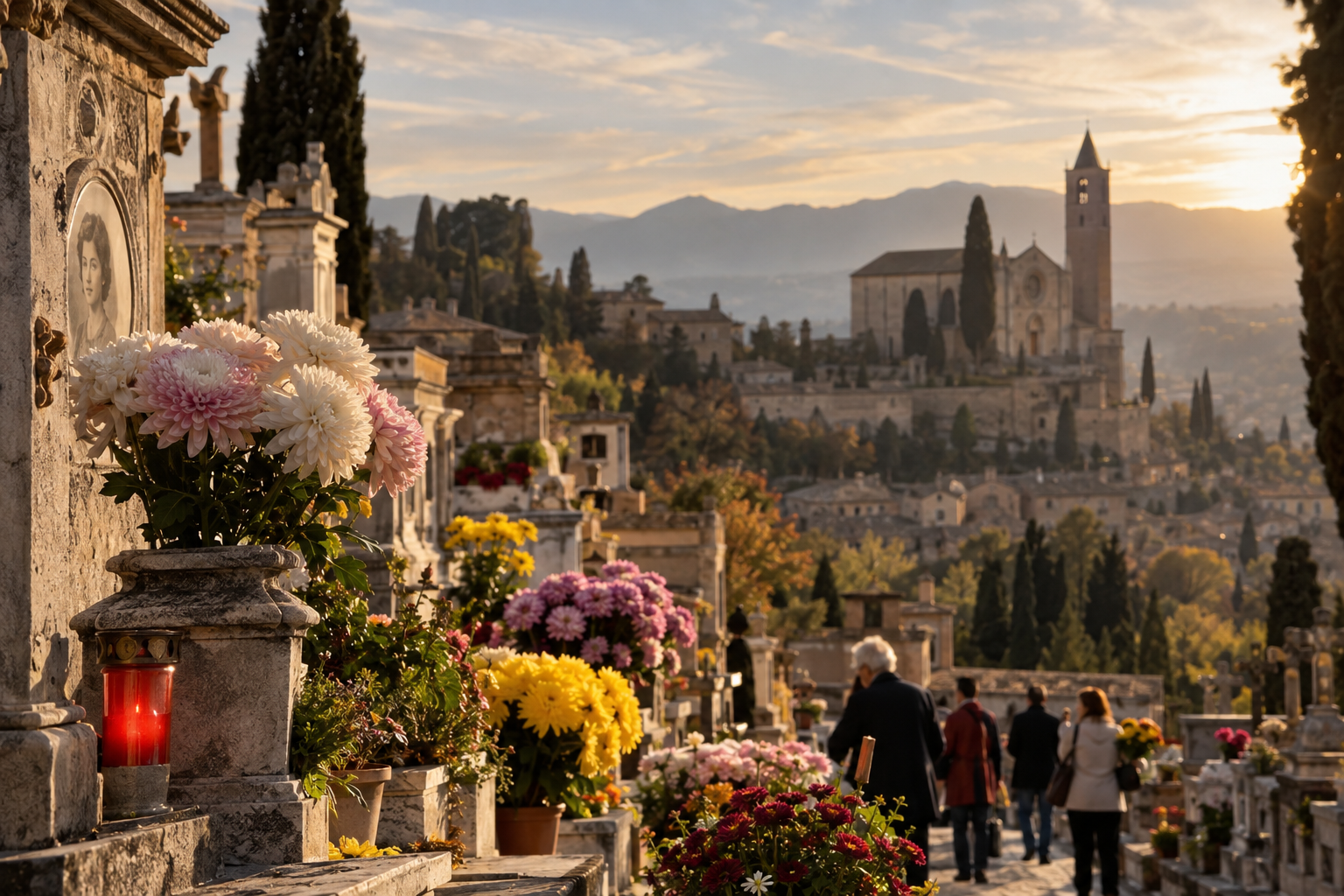
At the start of November, the Italian landscape changes overnight. Flower stalls spill over with chrysanthemums, roads to the cemeteries fill with traffic, and everywhere you see people carrying armfuls of blooms. It’s Ognissanti (All Saints’ Day, November 1) and Giorno dei Morti (All Souls’ Day, November 2).
In many northern European countries, All Souls’ Day is often a quiet, private affair. In Italy, it feels more like a mass migration. Families head to the cemeteries, sometimes days in advance, to clean and polish the graves. On the day itself, the atmosphere is almost festive: children dart between tombstones, aunts catch up as they arrange flowers, and old acquaintances greet each other as if they’ve stumbled onto a town fair. To an outsider, it can look like a celebration, just with a slightly stricter dress code.
An ancient ritual
The idea that the dead remain part of the community is ancient. The Romans celebrated the Parentalia, nine days in February devoted to visiting graves, offering food and wine, and sharing meals with their ancestors. The Etruscans, even earlier, painted banquet scenes in their tombs, death was not an end, but a continuation of life, complete with food and company.
The Catholic Church later gave these traditions a Christian frame. All Saints’ became the feast of the “official” saints, and All Souls’ the day for ordinary mortals. The result is what we see today: a yearly pilgrimage to the cemeteries, where faith, family, and a touch of chaos converge.
Sweets for the souls
And, as so often in Italy, remembrance also comes through food. Regional specialties appear everywhere:
- fave dei morti (almond cookies shaped like beans, symbols of rebirth),
- ossa dei morti (crunchy “bones”),
- and marzipan figurines so bright they look more like carnival candy than funeral offerings.
For children, this is the highlight of early November; for adults, a reminder that even the dead still “sit at the table.”
From pumpkins to chrysanthemums
In recent years, Halloween has crept into Italy as well. Children adore it: costumes, carved pumpkins, bags of sweets. Many adults dismiss it as a loud, commercial import from the U.S. But in truth, it fits perfectly into this season of transitions, from autumn to winter, light to dark, life to death.
Halloween isn’t really a new idea, just another way of weaving the dead into the lives of the living. Only this time with witches’ hats and sugar rushes instead of chrysanthemums and cookies.
And so Italy now has a double calendar: during the day you bring flowers to the cemetery, in the evening you put a pumpkin by the door because the children will come knocking. Slightly inconsistent? Certainly. Entirely Italian? Absolutely. Both traditions, in their own way, bring people together to eat, to talk, to remember and to live.
The social side of death
What strikes me most is how social this ritual is. There is sadness, of course, but the mood is lighter. People chat, laugh, even gossip (“Here, not even the dead rest in peace—they still get yearly visits from their in-laws!”).
And then there are the thousands of tiny lumini, candles lit at every grave. By nightfall the cemeteries glow with a soft sea of lights. It is strangely romantic: stone and silence softened by flickering flames, as if to say the dead are not forgotten but still part of the community.
The lesson of November
The true lesson of Ognissanti and Giorno dei Morti is that remembrance is not only about sinking into grief, but about celebrating life with those who came before us. The dead remind us that we are part of a larger story and that life becomes richer when we accept its limits.
A question worth asking ourselves: do we honor our past enough, while also daring to live the present to the fullest?
Yvette