September 6, 2025
The Rhythm of School and Holidays
Share This Note
Italy’s Hidden Calendar
In Italy, life doesn’t run on batteries but on holidays and school breaks. At least, that’s how it feels. Anyone living here soon discovers that the clock doesn’t tell the whole story: the real rhythm comes from school and feast days. Not because Italians have so many more days off than we Northern Europeans, quite the opposite, in fact there are fewer, but because those days carry more weight, are experienced more intensely, and often appear more unexpectedly in your calendar. Where in Northern Europe the year is neatly divided into short breaks, study days, and carefully distributed newsletters, Italy follows a very different beat. Here the calendar is tied to religion, tradition, and… above all, improvisation.
The Long Summer, from wheat fields to heatwaves
The long summer holiday started as an agricultural necessity: children helped with the wheat harvest and the grape harvest. That tradition stuck, even if today’s teenagers carry smartphones rather than sickles.
But there’s another reason Italian schools close for three months: the heat. In June, July and August the thermometer easily creeps toward 40 degrees. And most schools don’t have air conditioning. Children sitting for hours in stifling classrooms? Impossible. So the schools close and the whole country heads to the sea, the mountains, or, for the less fortunate, to nonna’s living room, at least somewhat cooler (if a little dark).
For parents, it means juggling. Grandparents become improvised summer camp directors, and those without that luxury enroll their kids in centri estivi (summer camps). But no camp in the world covers three full months. Summer becomes a logistical marathon, with creativity and family ties as the lifeline.
(Side note: early September I thought school would start. The truth? No one knew when. In the Netherlands you get a full year’s schedule of study days, sports days, even head lice checks. Here you get a WhatsApp: “We’ll start… next week? Maybe.”)
Holidays; fewer, but more intense
Compare the calendar with many other European countries and you’ll see: Italy has fewer official holidays. Yet it feels as if the year is strung together by them. That’s because of how they’re lived: each holiday is an event, a collective ritual.
- Capodanno (New Year’s) and Epifania (Epiphany): in Italy celebrated with La Befana, the broomstick witch who brings candy or coal. A tradition that feels a little like Halloween and Christmas rolled into one, gifts for children, but with a mischievous twist, and at the same time the official end of the holiday season.
- Pasqua (Easter Sunday) is solemn and religious (but with a massive family lunch), while Pasquetta (Easter Monday) is a national exodus. Families head to the hills with homemade Easter breads (really cheese breads) and capocollo, though personally I prefer Prosciutto di San Daniele. Always to spots that are barely accessible, the harder the path, the better the view. And let’s just hope it doesn’t rain… or you’ll find yourself sliding down a muddy slope on your backside, clutching bread and ham.
- 25 April – Festa della Liberazione (Liberation Day): Italy’s equivalent of Independence Day, commemorated more solemnly, with parades, flags, and concerts.
- 1 May – Festa dei Lavoratori (Labour Day): similar to Labor Day in the U.S., though in Italy it’s taken more seriously, with marches, concerts, and, of course, long lunches.
- 2 June – Festa della Repubblica (Republic Day): Italy’s version of the Fourth of July, with a military parade in Rome and a wave of national pride.
- Ferragosto (15 August) is the summer’s peak: the entire country shuts down, everyone heads to the sea, lakes, or mountains. Cities are deserted, the coast one big festival of inflatables, coolers, and sunscreen. Emperor Augustus himself would be proud of this mass tradition bearing his name. Imagine Memorial Day weekend, but the whole country takes part, with more wine, pasta, and inflatable flamingos.
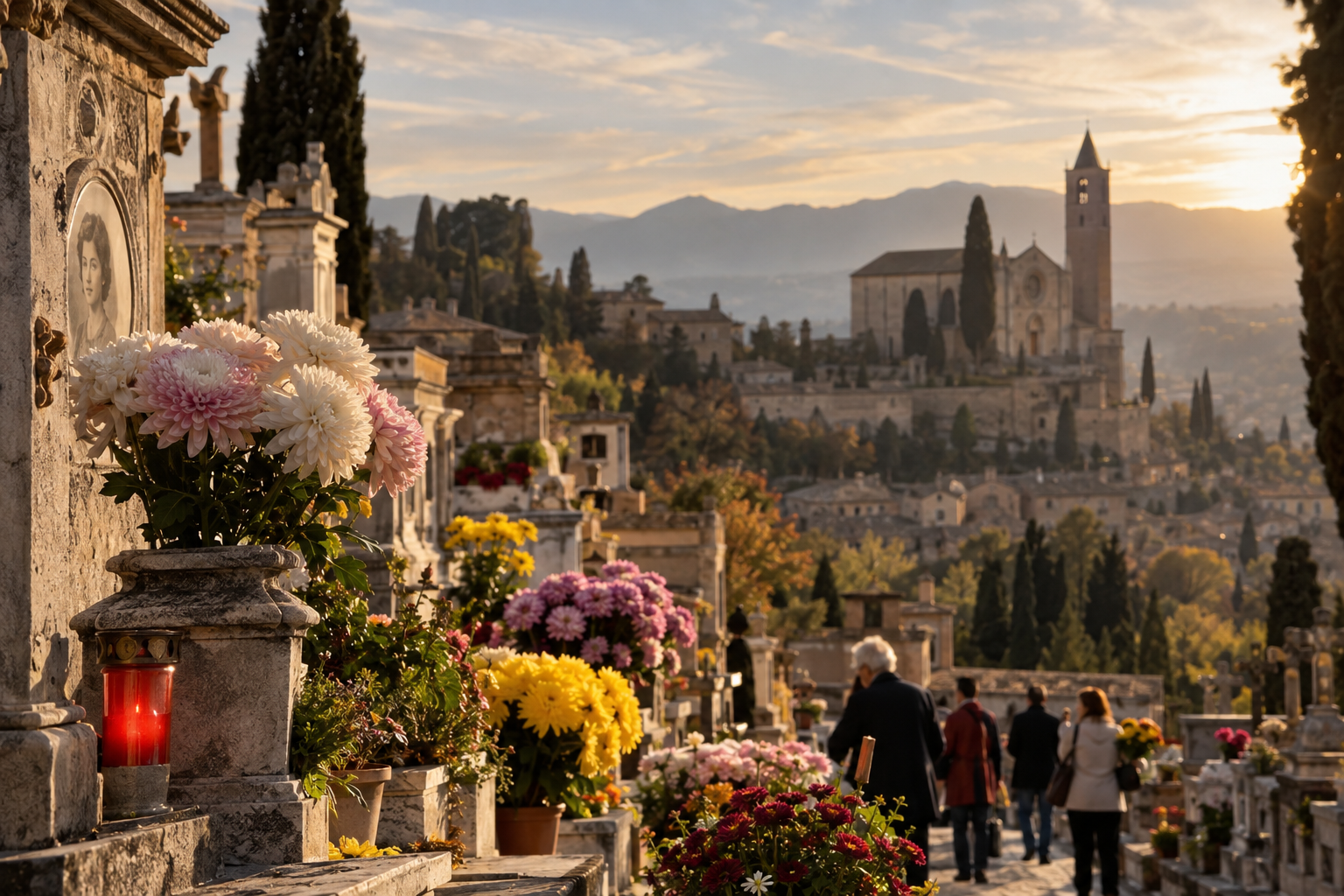
- 1 November – Ognissanti (All Saints’ Day): a Catholic holiday when families gather and cemeteries bloom with flowers, not unlike Memorial Day but with a more spiritual focus.
- 8 December – Immacolata Concezione (Immaculate Conception): a religious feast that, for Italians, marks the true start of Christmas. From December 8, Christmas lights go on everywhere.
- 25 December – Natale (Christmas) and 26 December – Santo Stefano: like Christmas Day and Boxing Day in the UK, but often more elaborate. Two days of feasting are the minimum, three are better.
And then there are the patron saints of each town: the equivalent of a local holiday, but with processions, fireworks, and at least one nonna who makes sure you waddle home overfed.
The art of the ponti
A typically Italian specialty is the ponti (bridges). If a holiday falls on Thursday, Friday is usually added. On Tuesday? Monday as well. One holiday becomes a mini-vacation. No extra days off, but a calendar that feels looser, more human. For the economy sometimes a headache, for Italians a lifestyle.
North vs. South, protocols and poetry
What strikes me most is the contrast with Northern Europe. In the Netherlands or Germany everything is set in stone: parents know a year ahead exactly when the holidays, study days, and parent-teacher evenings will be. Schools send fifteen-page newsletters with tables, protocols, and even lice-control schedules.
In Italy, the answer is often: “Vedremo” (“We’ll see”). It brings freedom, but also nerves. Try combining work, kids, and an uncertain start date. And yet it has charm: life refuses to be fully scheduled, no matter how much you might want it.
The lesson
What Italy teaches me is that time is not only hours and schedules, but also traditions, seasons, and collective moments. The calendar is less predictable, but richer in meaning.
And yes, sometimes I long for a Dutch newsletter with fifty pages of protocols. But more often I laugh at the cheerful chaos of Pasquetta, or at a whole country deciding on Ferragosto: today we do nothing.
And you? Do you prefer a calendar that guarantees certainty and structure, or one that follows the Italian rhythm of seasons, saints, family and a healthy dose of improvisation?
Yvette